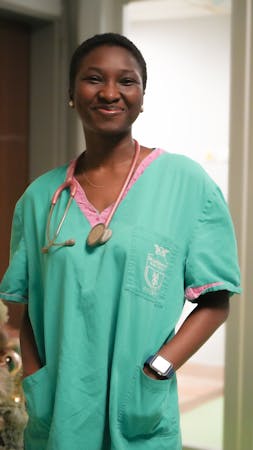
You made it. After years of school, clinical rotations, countless exams, and finally passing the NCLEX — you’re a nurse. The hard part is over, right?
Not quite. Landing your first nursing job can feel just as daunting as nursing school itself. Hundreds of applicants, conflicting advice online, and a job market that varies wildly depending on your specialty and location.
This guide breaks it down into exactly what you need to do — in order — to get hired as a new grad RN. I went through this process myself, and I’ve watched dozens of new nurses navigate it. Here’s what actually works.
1. Get Your License Sorted First
Before you apply anywhere, get your NCLEX scheduled and passed. Most hospitals will not process your application without an active license number — they may accept a pending status for some positions, but don’t count on it.
Once you pass, verify that your license is active in the state you plan to work. If you’re in a Nurse Licensure Compact (NLC) state, you may be able to practice in other compact states without a separate application — a big advantage if you’re open to relocation.
2. Decide Where You Actually Want to Work
New grads often make the mistake of applying everywhere and hoping something sticks. A better approach: get specific first, then broaden if needed.
Think through these questions before you start applying:
- What setting do you prefer? Hospital (acute care), outpatient clinic, long-term care, school nursing, home health? Each has a completely different pace and culture.
- What unit interests you most? Med-surg, ICU, ER, L&D, pediatrics? Even if you’re open to anything, having a preference sharpens your resume and interview answers.
- Are you willing to relocate? Some markets are actively desperate for new grad nurses. If you’re flexible, you have more leverage than you think.
Med-surg is often recommended as the best starting point for new grads — and for good reason. The breadth of patient experience you gain is unmatched, and it opens doors to almost any specialty later. But it’s not the only path. Apply where you genuinely want to be.
3. Build a Nursing Resume That Actually Gets Read
Most new grad resumes look identical. Clinical rotations listed in a wall of bullet points, vague skills sections, and a generic objective statement at the top. Here’s how to stand out:
Lead with a professional summary, not an objective
Skip “I am seeking a position where I can grow as a nurse.” Instead, write two to three sentences that highlight your strongest clinical experiences and what you bring to the table. Example: “Recent BSN graduate with clinical experience in medical-surgical, ICU, and pediatric settings. Known for calm performance under pressure and strong patient communication skills. Eager to join a high-acuity acute care team.”
Detail your clinicals like real experience
Your clinical rotations are your experience. List each one with the unit type, patient population, skills practiced, and the number of hours completed. Recruiters know you’re a new grad — they’re looking to see what you were exposed to and how you talk about it.
Include certifications and training
BLS is a given. ACLS, PALS, or a Nurse Residency completion certificate will bump you ahead of other applicants. If you completed a capstone or senior preceptorship, include that prominently.
4. Apply to New Grad Residency Programs First
This is the most overlooked advice I give new nurses: look for new graduate nurse residency programs before applying to regular staff nurse positions.
Residency programs are structured 6–12 month programs specifically designed to transition new grads into practice. They offer mentorship, additional education, gradual orientation, and a built-in support network. They also have acceptance rates that are far more realistic for candidates without experience.
Most large hospital systems (HCA, CommonSpirit, Ascension, major academic medical centers) run cohort-based new grad programs. Search “[your target city] new graduate nurse residency program” to find open applications. These programs open and close on cycles — usually twice a year — so timing matters.
5. Use Every Connection You Have
Nursing is one of the most relationship-driven fields when it comes to hiring. An internal referral will get your resume looked at when an online application might disappear into an ATS void.
Work your network actively:
- Clinical preceptors and charge nurses — If you had a strong clinical rotation, reach out directly. Ask if they’re hiring or if they’d be willing to put in a word. Many new grads get hired on the exact floors where they did clinicals.
- Nursing school classmates — They’re all going through the same job search. Share leads, refer each other, and keep in touch. You’ll be each other’s professional network for your entire careers.
- LinkedIn — Build your profile now if you haven’t. Connect with nurse managers, recruiters, and fellow new grads in your target area. A direct message to a hiring manager is almost always better than an online application.
6. Nail the Nursing Interview
Hospital interviews almost always include behavioral questions — “Tell me about a time when…” scenarios. The format they’re looking for is STAR: Situation, Task, Action, Result.
Prepare specific stories from your clinicals for these common prompts:
- A time you had to prioritize multiple patients
- A time you caught a potential error or safety issue
- A difficult patient or family situation you navigated
- A time you had to advocate for a patient
- A mistake you made and what you learned from it
Also prepare thoughtful questions for the interviewer. Ask about nurse-to-patient ratios, what orientation looks like, turnover on the unit, and how new grads are supported. These questions signal that you’re serious and doing your due diligence — not just desperate for any job.
7. Don’t Overlook These Often-Ignored Job Sources
Most new grads apply through Indeed or straight to hospital career pages — and those are fine. But don’t stop there:
- State nursing association job boards — Often post positions that don’t make it to major job sites
- VA hospitals — The Department of Veterans Affairs hires new grads and offers strong benefits, competitive pay, and an excellent pension. Applications go through USAJobs.gov.
- Community health centers and FQHCs — Federally Qualified Health Centers often hire new grads for outpatient and primary care roles with great training
- Long-term care and skilled nursing facilities — SNFs often hire new grads readily, and the clinical load will build your assessment skills quickly
8. Handle Rejections the Right Way
You will get rejected. Almost every new grad does — sometimes many times. This is not a reflection of your abilities as a nurse. The job market is competitive, positions are often posted as a formality for internal candidates, and hiring cycles are unpredictable.
When you get a rejection, send a brief, professional email thanking the recruiter or manager and asking if they can share any feedback. Most won’t respond, but occasionally you’ll get useful information — and you’ll always leave a better impression than the candidates who simply disappear after a no.
Keep applying, keep networking, and adjust your materials based on any feedback you get. The average new grad job search takes 2–4 months. Some take longer. You will get there.
The Bottom Line
Getting your first nursing job is a process, not a single application. Focus on new grad residency programs, leverage every clinical relationship you built, write a resume that actually reflects your experience, and interview like you’ve done your homework — because you have.
You survived nursing school. You passed the NCLEX. Landing the job is the next challenge — and you’re equipped for it.
Have questions about the new grad job search? Drop them in the comments or reach out here. And if you found this helpful, share it with a fellow new grad who needs it.
Leave a Reply